Things to Know When Traveling to Hoi An
- 20/10
- Nuly
- 02 Bình Luận
Hoi An is located in the lower reaches of the Thu Bon River, Quang Nam province. It is a famous tourist city commonly known as Hoi An Ancient Town.
In Hoi An, you have the opportunity to immerse yourself in a traditional cultural space with long-standing craft villages such as Kim Bong carpentry village, Thanh Ha pottery village, Phuoc Kieu bronze casting village...
.jpg)
The Scenery of Hoi An Ancient Town
Hoi An Ancient Town stands out with traditional architectural styles and relics such as Phuc Kien Assembly Hall, Japanese Covered Bridge, Quan Cong Temple, Tran Family Chapel.
Dishes like Cao Lau, Quang noodles, and Banh Xeo also attract many people to this town.
Best Time to Travel to Hoi An
The best time to travel to Hoi An is from February to April each year, with little rain and pleasant weather. Avoid the summer from May to September because the temperature is very high. The worst rainy season is from October to November, with heavy rains often causing severe floods.

Night Scenery in Hoi An Ancient Town
You should visit Hoi An on the 14th day of the lunar month to participate in the special ancient town night. To celebrate this occasion, Hoi An residents often hang many red lanterns throughout the streets. Instead of electric lights, the lanterns and moonlight will light up the entire ancient town.
Things to Explore in Hoi An
Japanese Covered Bridge
Built in the late 16th century, the Japanese Covered Bridge, also known as Lai Vien Kieu, has been a prominent spot in Hoi An for many years. In the middle of the bridge is a small temple worshiping Huyen Thien Dai De.

Japanese Covered Bridge
The bridge has a unique roof with decorative patterns, showing a harmonious combination of Vietnamese, Chinese, Japanese, and Western architectural styles.
The bridge connects Nguyen Thi Minh Khai and Tran Phu streets, spanning a creek flowing into the Thu Bon River.
Phuc Kien Assembly Hall
Legend has it that the predecessor of the assembly hall was a small temple worshiping the statue of Thien Hau Holy Mother, a goddess protecting merchants on the sea from danger, found on the Hoi An coast in 1697.
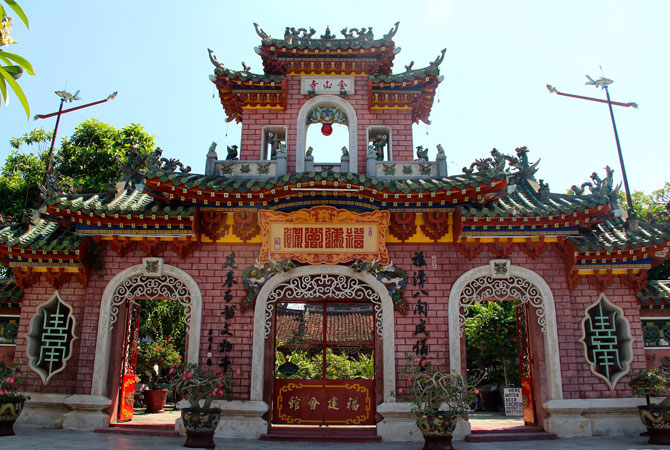
Phuc Kien Assembly Hall
Over many renovations with the main contribution from the Chinese Phuc Kien assembly, the hall has become more splendid, adding to the ancient urban architecture of Hoi An.
Location: 46 Tran Phu Street
Trieu Chau Chinese Assembly Hall
The assembly hall was built in 1845 by the Trieu Chau Chinese congregation to worship Ma Yuan, who was believed to ensure their sea journeys were smooth and favorable.

Trieu Chau Chinese Assembly Hall
The assembly hall is particularly valuable for its architectural structure with intricately carved wooden frames, decorative motifs, incense burners, and beautiful ceramic embossments.
Location: 92B Nguyen Duy Hieu Street.
Quang Dong Chinese Assembly Hall
The assembly hall was built by the Quang Dong Chinese congregation in 1885, initially to worship Thien Hau Holy Mother and Confucius. After 1911, it was changed to worship Guan Gong and the forefathers of the assembly.
The reasonable use of wood and stone in the load-bearing structure and decorative details gave the assembly hall a unique appearance.
Location: 176 Tran Phu Street
Tran Family Chapel
The Tran Family Chapel and church were built in 1802 by an official from the Tran family (a large clan from China who migrated to Hoi An in the 1700s). Covering an area of about 1500 m², the house is designed according to traditional Chinese and Vietnamese feng shui principles.
Inside, you will see an ancestral altar and a display area with relics related to the family over many generations.
Location: 21 Le Loi Street
Hoi An Museum of History and Culture
The museum was established in 1989 to preserve original artifacts and valuable documents of the people of Hoi An through different periods. Up to now, 212 historical items made of porcelain, iron, paper, etc., have been preserved and displayed here.
You will learn about the development stages of the port city through different periods: from Sa Huynh culture (1000 BC - 200 AD), Cham culture (2nd - 15th centuries) to Dai Viet and Dai Nam cultures (15th - 19th centuries).
Location: 13 Nguyen Hue Street
Tan Ky Ancient House
Built nearly 200 years ago, Tan Ky house has the characteristic architectural style of Hoi An townhouses, a perfect example of an 18th-century merchant's house.
The materials of the house were crafted by local carpenters and masons, creating a unique, elegant, and cozy style. Its interior is divided into different compartments, each with its own function.

Tan Ky Ancient House
The back of the house opens to the river wharf for importing goods, which are then moved to the front for sale.
On February 17, 1990, Tan Ky house was granted the title of National Historical - Cultural Monument.
Hoi An Handicraft Workshop
At this workshop, you can see most of Hoi An and Quang Nam province's traditional crafts. The crafts of mat weaving, fabric weaving, pottery making, and lacquer painting are all showcased here.
You will find the peaceful scenery of Vietnamese villages and witness the skillful hands of artisans creating unique and intricate products. You can participate in some stages of the crafting process and purchase some items as souvenirs.
Location: 9 Nguyen Thai Hoc Street.
Cua Dai Beach
Cua Dai is a beautiful beach area with white sand, clear water, and gentle waves. Fresh seafood stalls with affordable prices are always ready for a hungry stomach after swimming. Going to Cua Dai beach at night is also a good idea as it becomes quiet and romantic.

Cua Dai Beach
Location: 5 km east of Hoi An ancient town.
An Bang Beach
At An Bang Beach, you will feel the wonderful freshness when walking along the sand under the gentle sunlight, then watching the wild sunset over the sea.
The beach belongs to Cam An ward, 3 km east of Hoi An ancient town.
Thu Bon River
It is a great experience to join a boat trip along the Thu Bon River. The riverbanks have islets, fields, and mountains that look like paintings. Especially, the sunset on the Thu Bon River can mesmerize all visitors.

Thu Bon River Seen from Above
Location: Departure from the boat station on Bach Dang Street, passing a section of the Hoai River before reaching the Thu Bon River.
Kim Bong Carpentry Village
Kim Bong Carpentry Village is located in Cam Kim commune, Hoi An. The village is most famous for its traditional wood processing products, including cabinet making and shipbuilding.
Since its founding in the 15th century, Kim Bong carpenters have contributed their craftsmanship to many structures, most notably the ancient capital of Hue.

Kim Bong Carpentry Village
Visiting this woodworking village, tourists can witness many stages of creating intricate handicrafts.
Location: From Hoi An boat station, a 10-minute boat ride across the Thu Bon River.
Thanh Ha Pottery Village
Throughout the 16th and 17th centuries, Thanh Ha was a wealthy village famous for its ceramic and terracotta products sold throughout the central provinces of Vietnam. The village's pottery originates from Thanh Hoa province in the north.
Their main products are household items like bowls, plates, jars, pots... with various shapes and colors. Notably, their products are lighter than other similar ceramics.
Location: A 30-minute boat ride from Hoi An boat station.
Cu Lao Cham Island
Cu Lao Cham consists of 7 small islands: Hon Lao, Hon Kho Me, Hon Kho Con, Hon Tai, Hon Dai, Hon Mo, Hon La, Hon Ong. Cu Lao Cham is notable for its biodiversity, natural forests, beautiful beaches, coral reefs, and many valuable marine species.

Cu Lao Cham Island
Spending a night on Cu Lao Cham is an interesting experience. You can rent a tent for 50,000 VND and pay an overnight fee of 20,000 VND.
Location: Tan Hiep commune, 18 km east of Cua Dai beach. You can take a 30-minute speedboat from Cua Dai port or a 2-hour wooden boat from Bach Dang wharf.
What to Eat in Hoi An
Although Hoi An Ancient Town is small, it has a very rich culinary culture. Here is a list of delicious dishes you should not miss when visiting this place:
Hoi An Chicken Rice
Hoi An chicken rice is prepared with a special cooking process, creating a dish with a distinctive flavor, different from any other chicken rice.
Chicken is boiled and then shredded or sliced, seasoned with salt, pepper, chili, sugar, and Vietnamese coriander. The perfect combination of fragrant chicken slices with golden mixed rice.
The rice is special because it is cooked with chicken broth and a bit of fresh turmeric for a golden color. Side dishes include thinly sliced onions, pickled papaya, Tra Que herbs, and a bowl of chicken broth to enhance the chicken flavor. To create the familiar spiciness in central Vietnamese cuisine, chili sauce is a must and is poured over the dish.

Hoi An Chicken Rice
Some famous restaurants in the ancient town where you can enjoy chicken rice: Ba Buoi Chicken Rice - 26 Phan Chau Trinh, Ba Huong Chicken Rice - 48 Le Loi, Ba Minh Chicken Rice - 20-22 Dao Duy Tu.
Cao Lau - Hoi An's Signature Noodle Dish
Cao Lau is the signature noodle dish of Hoi An city. It is said that Cao Lau appeared in Hoi An in the 17th century. At that time, this dish was often eaten by merchants, and they had to have it on the upper floor to safeguard their goods. That created the name "Cao Lau," which means "upper-floor dish" - a delicious dish on the upper floor.
Authentic Cao Lau in Hoi An has a distinctive and unique taste you shouldn't miss. The noodles are made from rice soaked in lye water, giving the dish a different texture and color compared to other Vietnamese noodles. The pork is marinated with five-spice powder, sugar, pepper, salt, garlic, and soy sauce.

Cao Lau - Hoi An
A bowl of Cao Lau usually includes thinly sliced pork and greens on a layer of noodles. A bit of broth simmered from pork bones with onions or shallots is then poured over to moisten the dish. Finally, it is topped with some crispy squares, lettuce, bean sprouts, and fresh herbs. Cao Lau tastes best when mixed with lime and chili.
You can easily find Cao Lau in Hoi An, from street vendors to eateries on Tran Phu Street, the most famous being Ba Be, Trung Bac.
Phuong Bread
Not luxurious restaurants or eye-catching signs, the small bakery on Phan Chu Trinh Street consists of a display case full of ingredients, an oven, and a few tables and chairs. The first impression of any customer coming to Phuong Bread is its bustling yet simple ambiance.

Phuong Bread
This can be called the capital of bread because you will have the freedom to choose different fillings from cheese, meatballs, pate, eggs, ham, Chinese-style roast pork, chicken... mixed with vegetables like cucumber, pickles, basil, chili, onions...
Then, the insides are topped with the restaurant's special sauce. The balance between the amount of meat, vegetables, and seasoning is the secret to the perfect flavor of Phuong Bread.
Banh Bao and Banh Vac
Banh Bao and Banh Vac are two typical types of cakes in Hoi An often eaten together on one plate. Due to their small size and white color resembling roses, Banh Vac is also known as White Rose.
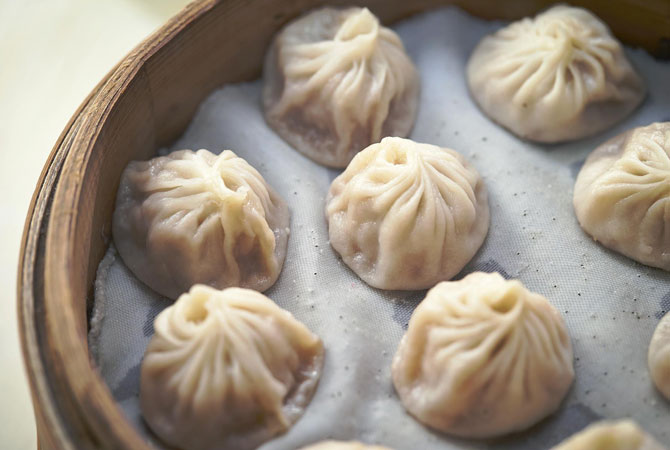
Banh Bao and Banh Vac
The difference between the two cakes is their filling. The filling of Banh Bao is finely ground fresh shrimp mixed with salt, pepper, onion, and a few other spices. Banh Vac has additional ingredients like thinly sliced pork, mushrooms, and green onions. Both types of filling are wrapped in a thin rice flour layer and steamed.
Address: White Rose Restaurant on Nhi Trung Street, where you can also watch the restaurant's meticulous cake-making process.
Banh Dap - Hen Xao
Banh Dap is a crispy rice paper sandwich with a soft rice paper layer in the middle and two crispy rice paper layers on the outside. It's usually eaten with anchovy fish sauce and fried shallots. You can add a bit of chili if you like it spicy. The combination of Hen Xao (stir-fried baby clams) with some herbs or boiled pork and fresh vegetables makes for a perfect dipping dish.

Banh Dap - Hen Xao
The crispy yet soft texture of Banh Dap, the fresh taste of stir-fried clams, and the strong aroma of sea anchovies and fried shallots make for a unique salty-sweet flavor that will surely be one of the most memorable tastes of Hoi An.
Che (Sweet Soup)
Che is a popular dish in Hoi An, and you can easily find street vendors with mobile pushcarts selling it. Here are some delicious sweet soups you shouldn't miss:
1. Lotus Seed Sweet Soup: You can buy this delicious soup at No. 1 Hoang Van Thu Street (4,000 VND - 10,000 VND per bowl).
2. Sweet Soup with Pork and Sticky Rice Balls: No. 4 Hoang Dieu Street (10,000 VND-20,000 VND per bowl).

Che
3. Mixed Sweet Soup: 369 Cua Dai Street (4,000 VND-10,000 VND per bowl).
4. Red Bean Sweet Soup: 10,000 VND - 20,000 VND per bowl.
5. Grass Jelly Sweet Soup: 18 Nguyen Tat Thanh Street (4,000 VND-10,000 VND per bowl).
6. Mung Bean Sweet Soup: No. 3 Nguyen Hue Street (4,000 VND-10,000 VND per bowl).
7. Corn Sweet Soup: 45 Le Loi Street (10,000 VND-15,000 VND per bowl).
Banh Beo
Banh Beo is a simple cake made from rice flour steamed in a small bowl, topped with minced shrimp, pork, onions, and crispy fried pork fat. A portion of Banh Beo includes 6-10 small bowls served on a tray with diluted fish sauce.
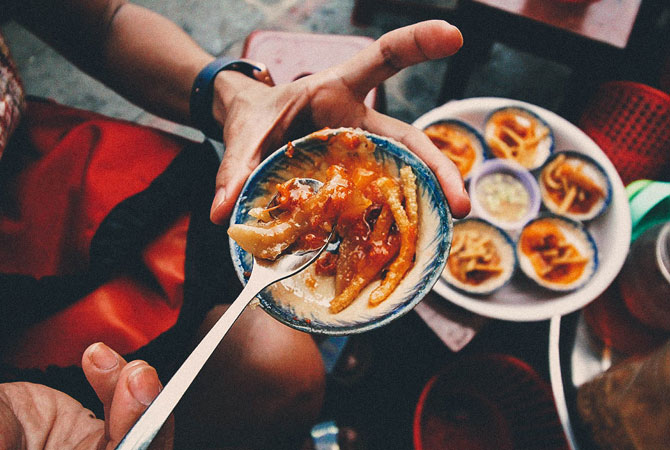
Banh Beo
When eating Banh Beo, people use a "bamboo knife," a tongue-shaped piece of bamboo, instead of a spoon.
Mi Quang (Quang Noodles)
Mi Quang is a specialty of Quang Nam province. At first glance, Mi Quang is quite similar to Cao Lau, but just one taste, and you'll see that these are two entirely different dishes.

Mi Quang
Quang has flat white noodles mixed with shrimp, pork, quail eggs, and vegetables, then sprinkled with roasted peanuts. Other versions include beef, chicken, frog, eel, and fish instead of pork. A small amount of broth, made from simmering pork bones with onions or shallots, is poured over to moisten the dish.
Hoanh Thanh (Wonton)
Hoi An has many long-standing famous dishes originating from other countries, prominently including wontons. Wontons are a dish originating from Guangdong province, China, and have become quite popular in many East Asian countries.
Although originally from China, wontons have gradually been "localized" to suit the Vietnamese palate over time. And for as long as anyone can remember, wontons have become a familiar dish associated with ancient Hoi An.
-1.jpg)
Hoanh Thanh Hoi An
Wonton filling is typically made from minced pork, shrimp, wood ear mushrooms, and green onions, all mixed with pepper, salt, and sugar. The filling is then wrapped in a thin rice flour layer. There are two popular ways to enjoy wontons: wonton soup (which can be eaten with noodles) and fried wontons. Each version brings its own delicious flavor.
Address: Van Loc restaurant on Tran Phu Street, 26 Thai Phien Street, Anh Dung - 14, Ba Trieu Street.
Banh Xeo (Vietnamese Pancake)
Hoi An Banh Xeo is an authentic specialty of Hoi An. The main ingredients of Banh Xeo are shrimp, pork, and bean sprouts. The dipping sauce is boiled soy sauce mixed with sesame, peanuts, and pickles. Banh Xeo here is served with fresh vegetables and costs 10,000 VND per piece.

Banh Xeo
Address: Gieng Ba Le restaurant - 45/51 Tran Hung Dao Street.
Fun Activities in Hoi An
Stroll around the ancient town in the early morning or late evening.
Hoi An is fascinating in the morning sunlight with quiet, peaceful streets, fewer tourists, and no electric lights. You can see how Hoi An residents start their day.
The ancient town is not noisy at night. This is a suitable time to walk through the fresh alleys of the ancient town and find some night restaurants. Cross the central pedestrian bridge, then head to An Hoi island, where you will find many bars and cafes serving cold beer or other drinks.
Tailor a Suit at a Shop
Hoi An is famous for its tailoring industry, and you can easily find great tailors all over the city. You can bring your own design and choose fabrics to create your personal creations. Time and price depend on the complexity of your clothing.

Tailoring shop
If the order quantity is not much, the tailor can make a shirt for you in just a few hours. However, normally you will need to leave about three days to a week for clothing orders.
Some tailoring shops: Thu Thuy shop 60 Le Loi, Yaly 358 Nguyen Duy Hieu, A Dong silk 40 Le Loi, Bao Khanh 101 Tran Hung Dao.
Buy Some Local Handicrafts:
Hoi An is famous for its lovely local products, and you can shop for these items while walking around the streets, in the central market, or in craft villages on the city's outskirts.

Buy Souvenirs
Lanterns here are beautiful and collapsible, making them great souvenirs. Hoi An shoes can also make great souvenirs. Similar to clothing stores, many shoe shops accept quick orders. Other items to buy: Silk, wood carvings, embroidery, stone sculptures...
You can take a tour around local craft villages to learn about the historical and cultural background behind making these items.
Cooking Class
You should join a cooking class to learn all about making some local dishes. A class usually includes a tour of the local market to buy the ingredients used for some dishes you will prepare. Some commonly selected dishes are Pho, Spring Rolls, Banh Xeo.

Cooking Class
One of the famous cooking schools is Guoan Restaurant and Cooking School. Here you can sign up for a class or just order something to eat.
Visit Hoi An Silk Village
Hoi An Silk Village is located on the outskirts of the ancient town, where you can explore ancient weaving techniques.
The village is just one km from the city but is an ancient village with houses built in the traditional style. You meet village artisans to learn how to make beautiful silk pieces.

Visit Hoi An Silk Village
You can even help them feed the silkworms and peel their cocoons.
Traditional silk items here make great gifts and souvenirs.
Enjoy a Cup of Coffee
Vietnam is famous worldwide for its delicious coffee, and Hoi An contributes to this fame with its unique brewing methods. Hoi An people like to start their day with a cup of coffee on small roadside tables.

Enjoy a Cup of Coffee
The ancient town has many cafes serving delicious drinks and beautiful river views. Some shops even roast their own beans and serve you some of the best espressos in town.
Visit My Son Sanctuary
My Son Sanctuary is a complex of Champa temples built from the 4th to the 13th centuries. Located 45 km west of Hoi An, this area is in a valley about 2 km in diameter, surrounded by hills.
It used to host ceremonies and royal tombs of the ancient Cham dynasty kings. In 1999, My Son Sanctuary was recognized by UNESCO as a World Cultural Heritage site.
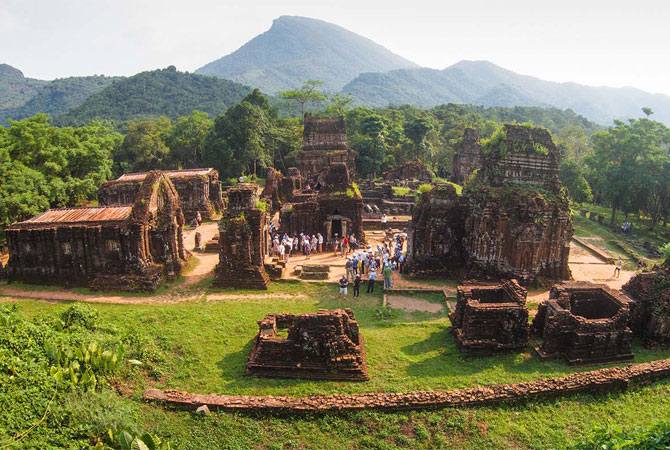
My Son Sanctuary
This complex has over 70 temples and towers spread over 140 hectares. The structures feature many sculptural architectural styles typical of each historical period of the Champa kingdom.
Walking around the complex, you'll see six styles: the earliest ancient style to Hoa Lai, Dong Duong, My Son, Po Nagar, and the Binh Dinh people's style. The architectural sculptures at this site are strongly influenced by Hinduism.
Visit Tra Que Village
Hoi An is an ancient town surrounded by emerald-green countryside. You can sign up for a cycling or hiking tour to explore the rice fields, hills, and beautiful villages.
One of the most interesting villages to visit is Tra Que Village, famous for its delicious fruits and vegetables. Most of the food you eat in Hoi An is grown here.

Visit Tra Que Village
On the way to the village, you can stop by the Waterwheel, which has cooking classes where you can learn how to use local produce. You can join farmers in planting, tilling, fertilizing, and harvesting vegetables.
Admire Quan Cong Temple
Mentioning Hoi An, people will immediately think of the ancient streets, old mossy-tiled houses, and unique architectural works with great spiritual significance to the residents. One of them is Quan Cong Temple, a unique tourist spot in Hoi An.

Quan Cong Temple
Quan Cong temple is located at 24 Tran Phu street, Hoi An ancient town. The temple was built in the 17th century during the most prosperous trading period of Hoi An port. Many Chinese merchants came here to trade and chose Hoi An as their second home.
In their lifetime, they built architectural works to serve their spiritual life, and Quan Cong temple is one of them. The temple's architecture is considered the most typical among the temples and shrines in Hoi An.
Try Local Barbecue
One of the things that makes Hoi An attractive is its delicious barbecue. If you walk along the north bank of the Thu Bon River after dark, you will come across many small charcoal grill stalls selling delicious grilled meat skewers. Late at night is always a great time to enjoy street food with spicy grilled dishes. Just stop at a barbecue stall, order some juicy meat and tempting vegetables, and taste them.
The menu is quite diverse with many different dishes, including beef, pork, shrimp, and chicken. The skewers come with herbs and a bit of rice paper to wrap inside. The perfect roll goes with spicy peanut sauce mixed with sesame seeds.

Local Barbecue
Among the must-see tourist spots in central Vietnam, Hoi An ancient town looks like a rustic, simple, and poetic picture. Whether day or night, Hoi An attracts people with its different charms.
Along with the cultural values through outstanding architectural works, Hoi An also preserves a fairly large intangible cultural heritage. The customs, beliefs, folk art, cultural festivals, unique dishes, and poetic natural landscapes make Hoi An a must-visit place.
Thank you for following, I hope it helps. Hope to see you soon in Hoi An to relax and explore the culture and people here.