

Things to Know When Traveling to Pu Luong
- 12/04
- Robert
- 02 Bình Luận
Do you want to escape the sweltering heat and the busy life of the noisy city? Come to Pu Luong, where you can immerse yourself in pristine forests and breathe in the fresh, cool air. This Pu Luong travel guide provides you with the information and things to do in Pu Luong that you need for a great weekend with family and friends.
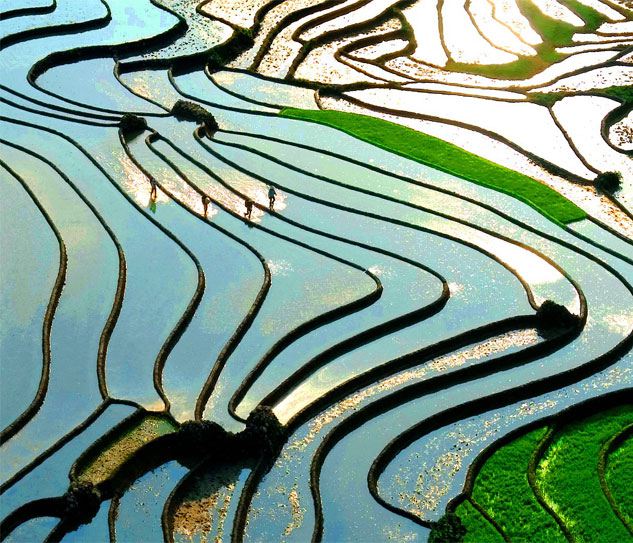
Pu Luong Nature Reserve is connected to Cuc Phuong National Park by two parallel limestone mountain ranges stretching 25 km. In between are beautiful rice valleys. With an area of over 17,600 hectares, Pu Luong impresses visitors with the wild beauty of its primeval forests, terraced fields, and the peaceful life of the local people.

Villages and Terraced Fields in Pu Luong
Three places visitors should go are Ban Don, home to the most beautiful terraced fields in Pu Luong; Son Ba Muoi (Lung Cao commune); and Pu Luong Peak, which is 1,700 meters high. Additionally, around Pu Luong are many other famous tourist attractions such as Lac Village (Mai Chau), Cam Luong God Fish Stream, Cuc Phuong National Park (Ninh Binh), and the Ho Citadel (Thanh Hoa)...
Best Time to Visit Pu Luong
Late May to early June: All the fields and terraced fields are dressed in a beautiful and peaceful green coat.
September to October:
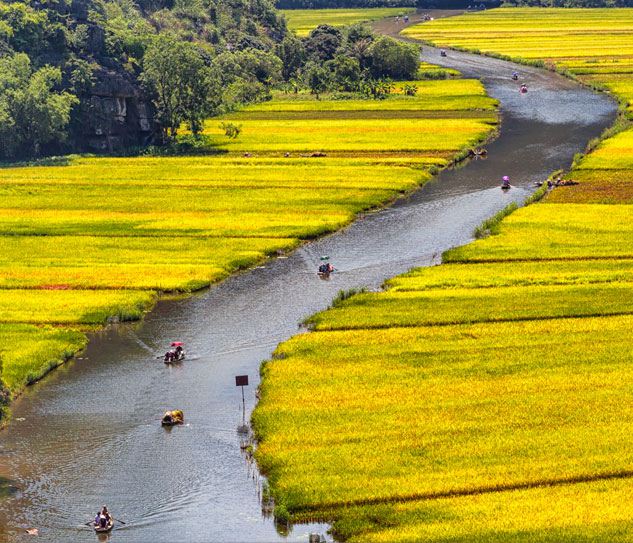
Pu Luong enters the harvest season, and all the rice fields on the hillsides turn a bright yellow, giving Pu Luong a rich and poetic beauty. This is also the best time to visit Pu Luong.

The harvest season in Pù Luông
If you can't arrange a trip during these two periods, you can still visit in the summer. Thanks to being in a high area and surrounded by primeval forests, Pu Luong's weather is quite cool and pleasant even in the summer.
Or you can visit in any season to relax with the cool year-round mist in some highland villages.
How to Get to Pu Luong
Bus
There is no direct bus route to Pu Luong, so if you want to use public transportation to get there, it will be quite difficult. To travel to Pu Luong Thanh Hoa, you will need to use a combination of different means. From Hanoi bus stations such as Giap Bat or My Dinh, you can take a bus to Ba Thuoc (Canh Nang town). This bus will take you to the district center. From there, you can hire a motorbike taxi to Pu Luong, which is about 20 km away.
Personal Vehicle
The most convenient and fastest way to get to Pu Luong is by personal vehicle (motorbike or car) if you start from Hanoi or some northern provinces.
From Hanoi
You can take a circular route to avoid repeating the same path. From Hanoi, follow National Highway 6 towards Hoa Binh province. Then take one of two routes through Lung Vai cloud valley or Lac Village, Mai Chau to reach Pu Luong.

The road through Lung Van
The road through Lung Van is narrow, winding, and resembles the terrain of the northwest provinces. The scenery on both sides of the road is majestic and wild. You will have the opportunity to admire the wonderful scenery, with clouds embracing the mountains or the misty valley below. The distance is about 200 km, and the travel time is 4-5 hours.

Cam Luong God Fish Stream
When returning from Pu Luong, follow National Highway 15C and 217 to Cam Luong God Fish Stream. From there, follow the Ho Chi Minh road to the Xuan Mai junction (National Highway 6) back to Hanoi. Although this road is longer, it is easier to travel and is also quite cool and breezy for sightseeing. On the way back, if you have time, you can visit and explore Cuc Phuong National Park.
From Ho Chi Minh City
You can take a flight to Hanoi and then follow the routes mentioned above, or take a direct flight to Thanh Hoa and rent a motorbike to Pu Luong. From the airport, travel along National Highway 15 for about 100 km, taking 4-5 hours to reach Pu Luong.
You can visit other destinations in Thanh Hoa on the way: Lam Kinh Heritage and Cam Luong God Fish Stream.
Accommodation in Pu Luong
Homestays are the main form of accommodation in Pu Luong. Most homestays are located in Co Lung, Thanh Lam, Thanh Son, and Lung Cao communes in Ba Thuoc district, Thanh Hoa. Staying in a homestay costs around 250,000 VND - 500,000 VND per person per night. You will experience the local people's lifestyle and enjoy special dishes made by them.
Recently, some resorts have been built in Pu Luong to meet the demand for high-end, professional accommodation services with highly rated quality. However, staying in these resorts can be quite expensive, around $50 - $150 per night depending on the room type.
Resorts in Pu Luong
Pu Luong Natura Bungalow: With the advantage of being a nature resort located in the pristine nature reserve, along with unique architectural marks, Pu Luong Natura is an ideal place to return to nature.

Pu Luong Natura Bungalow
Located in Ban Don, Ba Thuoc district, the resort covers more than 1,800 m², with the most unique swimming pool in Vietnam and bungalows right next to the terraced fields. Here, you will immerse yourself in the rustic natural scenery.
Pu Luong Retreat: Located in the core area of the nature reserve, Pu Luong Retreat, as the name suggests, offers peaceful accommodation where you can escape the noise of the outside world and immerse yourself in nature and greenery.

Pool in Pu Luong Retreat
The retreat features an outdoor infinity pool, a restaurant, and a garden with landscaping blocks. You can see the mountains and rice fields from this accommodation.
Bản Hiêu Garden Lodge: Situated in Ban Hieu within the Pu Luong Nature Reserve. Guests can cycle to explore the Pu Luong Nature Reserve, bathe in Hieu Stream, discover the Thai villages, view the golden terraced fields, and go fishing...

Bản Hiêu Garden Lodge
Homestays in Pu Luong Thanh Hoa
Depending on your group's itinerary, you can choose one of the villages here to stay overnight. Below is a list of some homestay accommodations providing dormitory-style lodging.
Ban Kho Muong: Mr. N's house, Mr. Nam's house, Mr. Thanh Tuan's house.
Ban Na: Mr. Hoang's house, Mr. Minh's house.
Homestays in Pu Luong are unique places for young people who love to explore nature. Lodging, especially in the core area of Pu Luong, is limited and often fully booked in the peak season. If you plan to visit during the peak season, you should book in advance for more options and better rates.

The Living Room of the Locals
Outside the core area, you can stay in Mai Chau, which is quite close to Pu Luong. Mai Chau offers many hotels and resorts for you to rest. You can take a motorbike or car to Pu Luong for a day trip and return to Mai Chau to stay overnight.
Places to Explore in Pu Luong
Ban Kho Muong - Kho Muong Cave (Bat Cave)
On the journey to the majestic peak of Pu Luong, there is a very pristine and rustic valley called Kho Muong. This is one of the poorest highland villages in Thanh Son commune, Ba Thuoc district. However, this place has a lot of potential in natural conditions and cultural traditions to develop community-based tourism.

Ban Kho Muong - Kho Muong Cave (Bat Cave)
The road to Kho Muong is a winding, curvy arc. On one side is a mountain cliff, and on the other is a deep abyss with golden terraced fields and vast forests.
This is home to 60 households, mainly White Thai ethnic people, with a population of 230. The villagers mainly live by growing rice, corn, and cassava. Their livelihood is mainly self-sufficient. Thanks to the abundant natural resources, the villagers have built spacious stilt houses to welcome tourists.
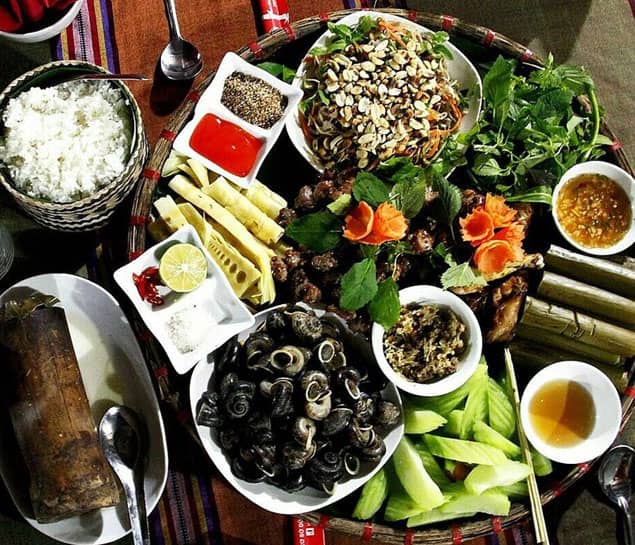
Besides the natural scenery, coming to Kho Muong, you can also learn about the culture and customs of the local Thai people and enjoy traditional dishes rich in mountain flavors such as bamboo-tube rice, corn wine, banana flower salad, bitter bamboo shoots, pickled shallots, and duck meat...

Bat Cave in Pù Luông
The highlight of Kho Muong village is Kho Muong Cave, also known as Bat Cave. The mysterious cave seems to be forgotten in the area. To reach the cave entrance, you have to travel on a rocky dirt road covered by forest trees. The cave is more than 2.5 km wide, with many nooks and crannies deep into the ground.
Kho Muong Cave is called Bat Cave because it is home to many species of bats. At least 4 species of bats are found in this cave at different times of the year. The deeper you go into the cave, the more strange-shaped rocks and stalactites you will see, resembling human shapes and trees.
Ban Hieu - Hieu Waterfall
Ban Hieu is a Thai village peacefully situated by Hieu Stream, originating from the top of Pu Luong. The 25 km road from Canh Nang town to Ban Hieu is well worth the trip, with beautiful terraced fields planted along the stream. The road is stunning during the ripe rice season when the entire field is covered with a vibrant yellow coat.

Ban Hieu
Ban Hieu connects to the outside world with a wooden suspension bridge. The village has over a hundred houses scattered on both sides of the stream. Although short, about one kilometer long, the stream has five beautiful waterfalls. All these waterfalls are called Hieu Waterfall, with an average length of about 800m.
Hieu Waterfall and Hieu Stream originate from a limestone cave in the Pu Luong - Cuc Phuong mountain range. Flowing to the mid-mountain, the water splits into two branches, following two different directions and finally merging at the end of the stream. According to locals, Hieu Waterfall never runs dry.

Hieu Waterfall
The water here is crystal clear year-round, cool in summer and warm in winter.
At the end of Hieu Waterfall is a small lake. The water level is just over 1m, with a sandy beach forming a natural swimming pool where visitors can freely splash around after exploring the waterfall.
Ban Son - Ba - Muoi
Ban Son - Ba - Muoi are three highland villages in Lung Cao commune. This place has a mild and cool climate in summer, with an average temperature of 18 - 22 degrees. However, in winter, it is quite cold, sometimes dropping to -1, -2 degrees with snow.
Ban Son - Ba - Muoi, also known as Cao Son (literally means High Mountain), are villages located on the peaks of Pha H, Pha Chien ranges, at an altitude of 1,200 meters above sea level, running parallel to the majestic Pu Luong - Cuc Phuong mountain range.

Ban Son - Ba - Muoi
Due to their altitude and difficult access, Ban Son - Ba - Muoi is almost entirely isolated from the villages at the mountain foot. This gives Ban Son - Ba - Muoi a very natural pristine look, attracting adventure tourists. The area preserves many customs of the ancient Thai people. Their stilt houses still retain traditional imprints, showing distinctive features unaffected by modern architecture.
Ban Don Village (Thanh Lam Commune)
Ban Don is mainly inhabited by the Thai ethnic group, comprising 76 households and 285 people, with a total natural area of over 125 hectares in Thanh Lam commune.

Ban Don Village
Ban Don has a wild beauty, with long stretches of terraced fields and stilt houses perched peacefully on the hillsides. Impressively, when visiting Ban Don, visitors will be pleasantly surprised by the simplicity and enthusiasm of the locals. You can learn to weave fabric and enjoy many highland specialties such as forest bamboo shoots, hill chicken, wild boar, and fish soup...
Pu Luong Peak
Pu Luong boasts magnificent natural scenery. If you are adventurous, conquering the 1,700m high peak above sea level is the most exciting experience in Pu Luong. It takes about 6-8 hours in good weather conditions to reach the summit.

Pu Luong Peak
Once at the top, you will be completely overwhelmed by the mountain scenery, vast fields, and a few stilt houses at the foot of the mountain. You can camp here overnight to catch the first rays of sunlight the next morning.
Pho Doan Market
If you have the chance to visit on a Thursday or Sunday, you can join the Pho Doan Market in Lung Niem commune. This market is where the Kinh, Muong, and Thai people from surrounding communes, as well as people from Tan Lac, Lac Son districts in Hoa Binh province, come to exchange, buy, and sell their produce and goods.

Pho Doan Market
Pho Doan Market has the characteristics of a highland market, with mainly self-sufficient products. The goods, although simple, are quite diverse, such as brocade clothing, mustard seed wine, forest vegetables, insects, and fresh fruits...
What attracts tourists to the market is the unique culture of bartering goods of equivalent value. For example, two dozen eggs can be exchanged for a bundle of vegetables. Sometimes, they do not care much about the value as long as they are satisfied with the trade.
Muon Waterfall (Dien Quang commune)
About 100 km from Thanh Hoa city, following National Highway 217 to the highlands, visitors will encounter Muon Waterfall (also known as Mo Waterfall). The waterfall is located at an altitude of 500 meters above sea level, flowing from the rocky crevices at the top of Muon mountain. Muon Waterfall flows into a valley several hectares wide. From there, it cascades down the mountainside, forming multiple tiers like steps.

Muon Waterfall
Flowing through 43 different tiers covered only with rocks, water, and trees, the stream empties into the Dai Lan River to join the mighty Ma Giang River. At Muon Waterfall, visitors can climb the 43 tiers to reach the top.
What to Eat in Pu Luong?
In Pu Luong, tourism services are not well-developed, so there are not many restaurants. Tourists mainly order food at their accommodations. All accommodations in Pu Luong provide complete dining services. The locals will prepare all the dishes based on your group's number. Pu Luong cuisine bears the distinctive characteristics of Thai cuisine, with many dishes featuring mountain flavors.
Co Lung Duck
When visiting Pu Luong Thanh Hoa, you must not miss dishes made from Co Lung duck. The specialty of this dish comes from the firm and delicious meat of the local duck. The meat is prepared in various ways, but the best is crispy roasted duck.

Co Lung Duck
Grilled Fish
The fish is cleaned and marinated with spices. The spices are usually ingredients available in the mountains, such as mac khen, forest vegetables, chili, and lemongrass mixed with salt. After marinating, the fish is grilled over hot coals until golden brown. Grilled fish is best enjoyed with chili salt, five-colored sticky rice, and fermented rice.

Grilled Fish
Bamboo-tube Rice
This is a very familiar dish in the meals of the local people. Bamboo-tube rice in Pu Luong has a special delicious flavor because it uses upland rice, which has large, plump, white, and fragrant grains. The combination of the aroma of sticky rice with the fragrance of bamboo creates the enticing flavor of Pu Luong bamboo-tube rice.

Bamboo-tube Rice
Hill Chicken
Chickens raised on natural food in Pu Luong have very fragrant and firm meat. The best cooking methods for chicken are boiling and grilling. Boiled chicken retains its original flavor, while grilled chicken marinated with traditional Thai spices offers a unique and distinctive dish.

Grilled Hill Chicken
Bitter Bamboo Shoots
Forest bamboo shoots have a bitter taste at first bite but a very sweet aftertaste. They can be eaten in hotpot or stir-fried. This is a very simple dish but carries the best mountain flavors.

Boiled Bitter Bamboo Shoots
Grilled Pork
Grilled pork is a specialty of the Muong people. To preserve the meat's sweetness, the pig is cleaned before removing the innards. The meat is cut into pieces, the sausages are steamed over a wood stove, and the bones are simmered with wild bananas. Thinly sliced pork belly is marinated with onions and fish sauce, then wrapped in grapefruit leaves, skewered on bamboo sticks, and grilled over hot coals. Under the heat of the coals, the grapefruit leaves infuse the meat, and the sweet smoky aroma fills the space.

Grilled Pork
The grilled pork is then thinly sliced and placed on green banana leaves. It is delicious when eaten with grilled guava seeds and chili salt. The grilled wild pork is fragrant and slightly chewy, making it irresistible.
Ruou Can (Can Wine)
The Thai people in Pu Luong take pride in their traditional tube wine, Ruou Can. It is indispensable in meaningful meals and is often used for special celebratory occasions. Locals only invite someone to enjoy Ruou Can if they consider them an honored guest.

Ruou Can (Can Wine)
The wine is made from cassava yeast and mineral water, mixed with certain herbs from the local forest. This mixture is then fermented for at least a month in a large earthenware jar.
The flavor of Ruou Can is rich and distinctive. Unlike other wines that can be quite bitter or strong and may make you dizzy, Ruou Can makes you pleasantly intoxicated while keeping you clear-headed.
Lastly, but importantly, to have a perfect trip, visitors should prepare:
- Comfortable, breathable walking or hiking shoes.
- Extra clothes if you plan to bathe in Ban Hieu Waterfall.
- Sunscreen, antifungal cream, and insect repellent to explore the forest.
- Check the weather a few days before the trip to avoid rain.
- Fill up your fuel tank before entering Pu Luong.
Enjoy your trip!