Unmissable Destinations in Vietnam
- 19/09


Sapa is a highland district of Lao Cai province, located in the Northwest of Vietnam. With an altitude of 1600m above sea level and shrouded in mist all year round, Sapa is also known as the town in the clouds. This modest and tranquil land holds many wonders of natural scenery and people.
The cool mountain air, majestic wild landscapes, and the unique lifestyle of the ethnic minority communities have made Sapa a famous tourist destination in Northern Vietnam. If you enjoy hiking through forests, the rugged terrain and mountain air here make it the perfect place for you to get outside and explore.

Scenery of Sapa Town
Visitors can conquer the peak of Fansipan, view the Ham Rong flower garden, and explore the Muong Hoa valley. Other attractions include Silver Waterfall, Love Waterfall, Ban Ho, Sapa Market, etc.
The natural landscape of Sapa blends beautifully with human creativity. The mountainous terrain, the green of the forest, all form a harmonious composition. From the town center, you can embark on a backpacking trip to villages hidden in the mist, enjoy the sights, and the fascinating peaks.
The mountain scenery with blooming flowers will satisfy your eyes.
Sapa has a precious resource of cool, fresh weather with many diverse levels. Located at an average altitude of 1,500m - 1,800m, the town has an average temperature of 15-18°C.
From April to August, heavy rains (rainy season) fall on Sapa. July is the wettest and also the warmest month with an average maximum temperature of 23°C. By the end of the year, when winter arrives, temperatures in Sapa can drop below 0°C, occasionally with snow.
The best times to travel to Sapa are from September to November or from March to May. During these periods, the weather in Sapa is stable with dry sunny days and cool nights.
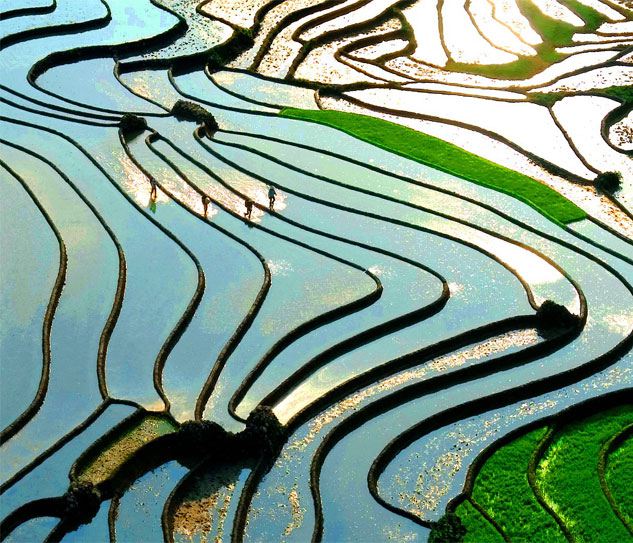
April to May is the time when ethnic minorities plant rice on terraced fields. This is also the blooming season of many beautiful flowers, making it an ideal time for photo hunts.

Terraced Fields in Water
September to October is the golden time of Sapa when the rice ripens, turning the town into a golden hue. During this time, Sapa wears a new coat - glowing gold all over the hillsides.
From December to February, it is very cold, icy, and sometimes snowy. This is also the season of cherry blossoms.
Sapa town is 38 km from Lao Cai city and 376 km from Hanoi. To travel to Sapa, you can choose either train or car.
By car:
1. Sapa Express (Ticket Price: 250,000 VND)
Hanoi Office: No. 12 Ly Thai To, Hoan Kiem, Hanoi
Sapa Office: 02 Cau May, Sapa Town, Lao Cai
2. Viet Bus (Ticket Price: 250,000 VND)
Hanoi Office: 284 Giai Phong, Thanh Xuan, Hanoi
Lao Cai Office: 339 Quang Truong Station, Lao Cai
Sapa Office: No. 1 Ngu Chi Son, Sapa
3. Sao Viet (Ticket Price: 250,000 VND)
Hanoi Office:
Lao Cai Office:
By Train:
You can choose hard seat, soft seat, or air-conditioned berth to experience a train trip. The train departs from Hanoi at 10 PM and arrives at Lao Cai Station at 6:30 AM the next day, then you need to transfer to Sapa town.

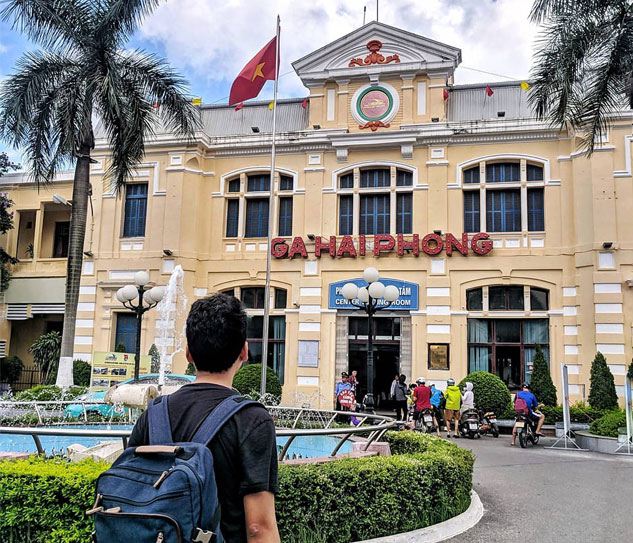
Ha Noi Station
From Lao Cai, you board the train at 9:05 PM and arrive in Hanoi at 5:30 AM the next day. You can refer to the Victoria Express Train, which operates daily except Saturdays.
Note:
To make sure you don't miss any spots in this beautiful mountain town, let's go through the list of the most attractive destinations below.
Ham Rong Park is an unofficial park located at the foot of Ham Rong Mountain. Wandering around the park, you'll feel like you're lost in a fairy garden with a myriad of flowers hidden in the clouds.

Visit Ham Rong Park
Climbing to the top of the mountain, you can see a panoramic view of Sapa, Muong Hoa Valley, and local villages.
Location: Town Center
Built in 1895, Sapa Stone Church is considered the most complete ancient French architectural mark remaining. The church has been restored and preserved, becoming an indispensable image when mentioning the misty town of Sapa.

Sapa Stone Church
Vị Trí: Town Center
An old village of the H'Mong people, Cat Cat village retains many traditional crafts such as cotton planting, flax weaving, and fabric dyeing. Today, it has been developed into the Cat Cat tourist area.

Cat Cat Village
Location: 2 km from Sapa town center.
Ta Phin village boasts beautiful natural scenery. It is home to the Red Dao people, famous for their brocade weaving craft. In Ta Phin village, you can visit Ta Phin Cave. Inside, there are many stalactites with shapes like dancing fairies, fairy courts, distant fields, and sparkling forests.
Hiking to Explore Ta Phin Village
Ta Van Giay Village Follow Highway 4D southeast for about 8 km from Sapa town to reach Ta Van Giay Village. Here, you have the opportunity to learn more about the lifestyle of the Giay people.

Ta Van Giay Suspension Bridge
The road into Ta Van Giay Village is small, narrow, and earthy, with lush terraced fields of corn and rice on both sides.
Sin Chai Village belongs to San Sa Ho commune, about 4 km from the center of Sapa town. This village has not been commercialized by tourism and still retains its inherent wildness.

Sín Chải Village
It is a village of the Black H'Mong with a population of about 1,400 people. In addition to rice and corn, Sin Chai villagers also grow cardamom to increase their income.
Passing through Muong Hoa Valley, you'll encounter fields of large stones engraved with various patterns. The stones are made of quartz and can be over ten meters long, lying amidst the grass, trees, and terraced fields of the ethnic minorities.

Mường Hoa Village
Hundreds of sandstone rocks are carved with strange drawings and characters. To this day, the origins and meanings of these mysterious carvings remain a mystery.
This ancient rock field has been classified as a national relic, a unique heritage of ancient Vietnamese people. In Muong Hoa Valley, you will find a beautiful stream stretching ~15 km, passing through the communes of Lao Chai, Ta Van, Hau Thao, and ending at Ban Ho.
Location: 8 km southeast of Sapa town.
Upstream of Chay River for about 6 km from the center of Bao Nhai commune (Bac Ha district), the boat will take you through Trung Do, the ancient citadel of legends. Chay River here forms a deep, gentle flow, winding between two cliffs. Fairy Cave is a miniature Ha Long Bay with clear water dotted with small limestone islands.
Location: 6 km from Bao Nhai commune, Bac Ha district.
Fansipan is the highest peak of the Indochina Peninsula (3,143 m), located in the center of the Hoang Lien Son range. You can join tours organized by travel companies or plan your own trip with guidance from the local H’Mong or Dao people.
On the way up, visitors will explore diverse flora and fauna, including valuable medicinal plants, precious wood, and various animals such as pheasants, monkeys, antelopes, and birds...

Fansipan Peak
You can also opt for a cable car to conquer the highest roof of Indochina. Since its operation in early 2016, the Fansipan cable car has helped thousands of visitors reach the top of Fansipan.
The 6,292.5 m (3.91 miles) system holds the Guinness World Record for the longest non-stop three-rope cable car in the world. It also holds the record for the world's greatest height difference between departure and arrival, measured at 1,410 meters.
ow, everyone, regardless of fitness level or age, can admire Fansipan's peak in just 15 minutes.
Location: 9 km southwest of Sapa town.
The road to Heaven's Gate winds through the middle of the mountain. This pass, known as Tram Ton, winds between the majestic Hoang Lien Son range, leading you to Heaven's Gate at the top of the pass. From Heaven's Gate, you can gaze out over the vast green valley below and Silver Waterfall in the distance.
Location: 18 km north of Sapa town.
Drive 12 km west from Sapa town, and you'll find Silver Waterfall cascading from over 100 meters into the stream below in O Quy Ho valley. It’s best to visit the waterfall during the rainy season for the most spectacular views.

Silver Waterfal
If you enjoy hiking, you can stop at Tram Ton, walk about 1 km through Hoang Lien National Park to explore Love Waterfall.
Location: 12 km west of Sapa town.
Coc San is a system of waterfalls and caves of varying sizes. What makes Coc San unique is that almost all waterfalls end in a cave. The only way to this area is via a small road (1 km) from Highway 4D.

Cốc San Cave Sapa
The road is full of rocks and not an easy task, but keep moving, and you will be rewarded by the majestic primitive beauty. The landscape of Coc San gives anyone who comes here a magical feeling from the waterfalls, rocks, and caves.
Location: Coc San commune, Bat Xat district, 7 km from Lao Cai city.
Built in 1914 and completed in 1921 in an East-West architectural style with a rectangular, closed structure. The entire construction process, from land selection, house orientation, to architecture, was handled by two French and Chinese architects.

Hoang A Tuong Mansion
The mansion has three main houses inside and two auxiliary houses on the left and right. In the middle is an inner courtyard, with the total area of the mansion being nearly 4,000 square meters.
Location: Center of Bac Ha district, Lao Cai.
Held every Sunday, Bac Ha is the largest market in the northern highlands. The market is a place for 14 ethnic groups living in Bac Ha town and surrounding districts to exchange daily necessities.
Here you will find stalls selling all kinds of essential goods like clothes, shoes, shovels, and household items. H'Mong girls in colorful traditional dresses and brocade stalls make the market a festive day.

Bắc Hà Market
This market has a unique and attractive horse market. Hundreds of horses provided by people from all over come here for sale. They lead the horses back and forth, check their legs, slap their backsides, and haggle.
The best thing about Bac Ha market is that visitors see the honest, hospitable faces of the local people, not aggressive sales pitches.
Location: Center of Bac Ha district, 60 km from Lao Cai city.
Traveling to Sapa during the end-of-year tourist season, you have the opportunity to participate in unique festivals here. Each festival is characteristic of the culture of an ethnic group, strange and very interesting.
On the first day of the lunar year, the Giay people in Ta Van village organize the Roong Pooc festival to pray for a bountiful harvest. This traditional festival of the Giay people has spread and become a common festival for the whole Muong Hoa valley for many generations. Besides unique rituals, there are also lively games, dances, and gong performances.

Roong Pooc Festival of the Giay People
On the Dragon day (auspicious day) of the sixth lunar month, the H'Mong, Dao, and Giay people gather in Ta Van village to organize the Nao Cong festival. Each family sends one representative, regardless of gender, age. The Nao Cong ceremony prays to the gods for a prosperous and bountiful life. The festival concludes with a joyful meal.

Nao Cong Festival
Tet Nhay Festival is an important and well-prepared festival of the Dao people. It is usually held on the first or second day of Tet. The main purpose of the festival is to pray for peace and prosperity. The festival features 14 dances performed by selected young men and unique rituals conducted by the shamans.

Tet Nhay Festival
Nhan Song is a festival of the Red Dao people in Ta Van village. The purpose of this festival is to raise awareness about preventing deforestation. Nhan Song is not an annual festival but is only held in years when there has been significant forest destruction. During the ceremony, the law to prevent deforestation and punish violators is announced.

The Girls at Nhan Song Festival
Annually, on Giap Ngo, Quy Mui or Nhan days in the second lunar month, the Xa Pho people hold the village sweeping festival. It prays for a peaceful new year, good crops, and healthy livestock. Villagers contribute food to make offerings.
While the shaman performs the religious rituals, villagers paint their faces and dance around. At the end of the ceremony, everyone enjoys the food together.
The spring tree planting festival of the Tay and Dao people in Ban Ho commune starts on the 8th day of Tet. After some important rituals, people enjoy traditional folk dances. After the performances, everyone participates in folk games.
The most interesting game is "Nem Con" (throwing balls through a ring). The game is played on a large field with a tall bamboo pole topped with a ring 30 - 40 cm in diameter.

Hiking Through the Forest During the Spring Tree Planting Festival
The balls are child-sized, made of colorful fabric, and stuffed with rice and cotton seeds (symbolizing food and clothing). The balls and bamboo rings represent vitality and virtue.
Before playing, the head of the festival first offers a tray of food to Heaven and Earth to pray for a bountiful harvest. Then, he throws two balls high up. Everyone competes to catch them, signaling the start of the festival. Then, players stand facing each other on opposite sides of the pole. Whoever throws the ball through the ring is the winner.
At the end of the festival, the leader performs a ceremony to pray for a good planting season, then breaks the balls and distributes the seeds to everyone. These seeds are believed to bring good luck and quickly sprout for a new year of abundance and happiness.
Traveling to Sapa will bring you incredibly new experiences. The journey to Sapa awaits you with interesting activities and hidden gems such as:
1. Conquer Fansipan
Fansipan, the roof of Indochina, has been challenging many young people to conquer it. If you like challenges and overcoming yourself, don't hesitate. You will enjoy the stunning scenery on the way to the roof of Indochina.
2. Admire the Greatest Terraced Fields in the World
The terraced fields in Sapa are recognized as some of the most magnificent terraced fields in the world. Nature has not only endowed the people of this land with ideal landscapes and climate but also with skillful hands.

Admiring the Greatest Terraced Fields in the World
For hundreds of years, they have woven a masterpiece - the steps leading to the sky. September is the harvest time when the lush green fields are replaced with a golden hue. This is a very appealing time to visit Sapa.
3. Hike Up Ham Rong Mountain to View All of Sapa
Viewing Sapa town from an altitude of 1,800m on Ham Rong Mountain is a wonderful experience everyone visiting Sapa wants to try. The town appears from a different perspective with small roads and houses beneath your feet. On Ham Rong Mountain, you can also enjoy vibrant flower gardens and stroll through the small rocky crevices in the Thach Lam Stone Garden.
4. Watch the Sunrise and Sunset in Sapa
The chilly early morning winds might give you a slight shiver. Holding a warm cup of coffee and gazing out of the window at a hotel with a beautiful view, you'll catch a gentle Sapa in the early morning mist.
When the sun sets behind the Hoang Lien Son range, Sapa is bathed in a violet hue, creating something romantic and a little sad.
5. Walk and Slow Down in Sapa
Sapa offers one of the longest trekking routes among tourist destinations worldwide. In Sapa, you can walk continuously for tens of kilometers, from morning to afternoon, crossing villages, rice fields, streams, and bridges. You will also find sparkling waterfalls and spectacular valleys scattered with rugged caves.

Walking, Slowing Down in Sapa
Walking down the hills to observe and learn more about the lives and culture of the local people here. The cool climate provides the best conditions for long hikes, and much of Sapa is covered by lush green hills. Interesting destinations include: Sapa Old Town, Cat Cat Village, Muong Hoa Valley, Ta Van, Ta Phin, etc.
6. Live Like a Local
Sapa is a collection of small local villages of ethnic minorities. If you want to escape the hustle and bustle of city life, this is your paradise. Getting lost in a village far from the town center will be an unforgettable experience when you set foot in this land.
You can easily find some homestays in these local villages. Spend the night there with an ethnic family and learn more about their centuries-old way of life. You can eat what they eat, live the way they live, and all of it is the highlight of your trip to Vietnam. Homestay services in Sapa are well-developed, and you can be assured of cleanliness and food hygiene.
7. Visit Silver Waterfall and Love
Waterfall Silver Waterfall and Love Waterfall are about 12 km from the town center on O Quy Ho pass. Here, you not only feel refreshed but also learn about the legend of Love Waterfall. The story begins when the Seventh Fairy met the woodcutter.

Visit Silver Waterfall
She was fascinated by his flute and wanted to be with him. Unfortunately, love between fairies and humans was forbidden by the laws of heaven. To hear the flute, she transformed into a yellow bird and followed the woodcutter.
8. Enjoy the Majestic Views at the Top of O Quy Ho Pass
After passing Silver Waterfall and Love Waterfall, you will reach the top of O Quy Ho Pass. This is one of the four great passes of the northern mountains. Standing on the top of the pass, you see the winding roads connecting Lao Cai and Lai Chau provinces. Next to it is the majestic Hoang Lien Son range.
9. Enjoy Sapa's Specialties
It would be a pity if you miss out on specialties like stone rươi (a kind of worm), stream fish floss, and mountain pork. You can find them at the fragrant grilled meat stalls in the town center at night. The weather in Sapa is perfect for enjoying hotpot or grilled dishes with a cup of corn wine.
10. Explore a Tourist-Free Sapa
Climbing Fansipan Mountain or strolling around the villages may not give you a new feeling when you come to Sapa? Then there are places without tourists, without noise, smoke, and commerce for you: Thanh Kim, Nam Sai, or Nam Cang. It will be just you, the forest stream, surrounded by terraced fields and the majestic Hoang Lien Son range.
11. Visit Sapa Museum
Among the beautiful tourist spots in Sapa, Sapa Museum is the most special. The museum displays artifacts and relics of the ethnic groups in Sapa through historical periods. The museum is located about 2 km from Sa Pa town, at No. 2 Fansipan Street. With such a short distance, visitors can walk, rent bicycles or motorbikes to the museum.

Sapa Museum
The first time you step into Sapa Museum, you will be amazed by the hundreds of artifacts neatly displayed on trays and wooden shelves. You can see brocades, household items, cooking utensils ... of many ethnic minorities living in Sapa.
In addition to ancient artifacts, visitors can also learn about the rituals, customs, and weddings of Sapa ethnic groups through ancient paintings and photos.
Sapa Museum will be an ideal destination for those passionate about Sapa culture and want to learn more about the long-standing ethnic groups on this land.
12. Buy Some Local Handicrafts
Sapa is home to many ethnic minorities in Vietnam. They include the Dao, Tay, H'Mong, and Phu La people. These ethnic groups are famous for making incredible local handicrafts.
You can easily find some traditional textiles or carvings at the night market near Sapa Church or visit the villages to see how these crafts are made. These items will make great gifts and souvenirs for your family and friends.
13. Drink Coffee and Watch Floating Clouds
If coffee is your thing, you can visit Cafe in the Clouds, one of the most beautiful mountain bars in Sapa. The bar is beautiful and offers food and drinks at reasonable prices. One of its highlights is the chance to see the panoramic view of the emerald green valley below.

Coffee and Scenic View Corner
As the name suggests, here you can enjoy your meal while being surrounded by clouds and mist.
14. Join an H'Mong Sewing Class
The Black H'Mong are famous for their sewing and weaving skills passed down from mother to daughter. Their textiles are highly valued for their attention to craftsmanship and natural dyes. Embroidery is primarily used to decorate handmade clothes for the New Year and their special occasions.
If you want to experience the whole process, you can visit Indigo Cat, one of the most famous craft shops in town. Join a class taught by local H'Mong community members here, and you can learn how to sew your own crafts.
You can also buy some beautiful textiles, local tea, and spices as souvenirs in the shop.
15. Shop at Sapa Market
Sapa Market offers you the chance to enjoy a traditional shopping experience. The market is near the local bus station, so you can stop by before catching a bus back to Hanoi. This local market sells a variety of colorful local products and a section of fresh meat. You will also find traditional handicrafts sold by hill tribe people here.
16. Stroll Around Muong Khuong Bird Market
The bird market in Muong Khuong district (Lao Cai) is a unique market for highland border people. Muong Khuong Bird Market is not only a place to buy and sell but also a place where bird lovers meet, chat, and exchange experiences in raising ornamental birds.
This special market is held every Sunday. To get there, you will need a car to take you to the highlands 90 km from Sapa.

Strolling Around Muong Khuong Market
Joining the market, you will be amazed by the lively scene of colorful clothes and the sound of buying and selling activities. In one corner of the market, people gather to sell and buy various types of birds or just to show off. The main bird you will see here is the nightingale.
17. Drinking Corn Wine in Ban Pho
If you have time to visit the Bac Ha market, do not miss stopping by Ban Pho, which is also in Bac Ha town. Here you can learn about the life of the Black H'Mong people.
The beauty of Ban Pho in spring is highlighted by the blooming plum flowers. Coming to Ban Pho, you will fall in love with the wonderful scenery of Bac Ha's highlands. Moreover, the people of Ban Pho will invite you to a meal with dishes from horse, cow, buffalo, and pig, served with corn wine, their pride. This is also a good opportunity to learn how corn wine has been made for centuries.
18. Join a Cooking Class
Vietnam is famous worldwide for its delicious cuisine, and you will find that in Sapa as well. What could be better than tasting a local delicacy made by your own hands? If so, head to Hill Station Signature Restaurant to book a cooking class one day in advance.

Attending a Cooking Class
In the class, you have the chance to learn to make traditional local dishes from an H'Mong chef. First, the chef will take you to the local market to select fresh ingredients. Tips for choosing good ingredients will be shared.
The classes usually teach you to cook five dishes, which you can then enjoy with some local wine in a communal dining room.
19. Have a Hotpot Meal
Hotpot is always favored in Sapa, whether in winter or summer, because the temperature in Sapa is usually lower than in other parts of Vietnam due to its high altitude. In Sapa, you can easily find a place to enjoy hotpot from street stalls and some restaurants attracting tourists.
The hotpot broth includes stewed meat, then you add local vegetables like cabbage, mushrooms. The prices here are very reasonable, worth every penny.
20. Visit the Rice Fields
The rice fields seem to be the main reason many people come to Sapa. You can choose to stay overnight in a homestay with a local family to wake up among the rice fields or simply take a trip to the nearby villages.
If you want someone to accompany you throughout the tour, you can book a guided tour from Sapa. The guide will take you to the beautiful terraced fields to admire the scenery and learn how the locals plant and harvest rice.
Thank you for following our article. We hope you find something useful in this article and look forward to seeing you in Sapa. We hope you and your loved ones have good health to explore new cultures and lands.





V'SunShine Travel always listen and arrange everything as you wish.